All American Boy: A Designer's Honest Embroidery Review
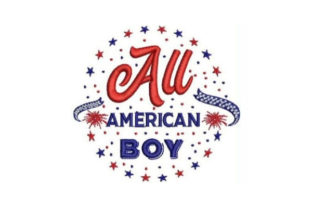
When I first opened the All American Boy machine embroidery design, I admit I was cautious. Independence Day designs can go one of two ways: they either feel timeless and wearable, or they lean into novelty that limits how often a customer will actually use the finished product. This one lands on the right side of that line. The color palette draws from the classic 4th of July celebration, but the composition itself has a grounded, approachable feel that doesn't scream "only wear this on one day of the year." As someone who tests embroidery files for real project use, I wanted to see whether All American Boy holds up under stitching, how it translates across different fabrics, and whether it earns a spot in my commercial rotation.
First Impressions and Real Project Potential
The mood of All American Boy is straightforward and proud without being heavy-handed. The design uses familiar patriotic imagery, but the layout is clean enough that it doesn't feel cluttered. That matters when you are stitching it onto a tote bag or the front of a sweatshirt. Customers browsing your Etsy shop or craft fair table will notice the difference between a design that looks like it was thrown together and one that has intentional spacing and balanced weight. This one leans toward the latter. It feels like a design that works for both a handmade product meant as a personalized gift and for a small shop looking to stock custom apparel for the summer season.
For my own test, I ran a sample on a medium-weight cotton tote bag. I wanted to see how the stitch density behaved on a fabric that gets regular use. The result was solid. The design held its shape without puckering, and the thread colors popped against the natural cotton background. If I were listing this as a finished product, I would feel confident photographing it for a printable mockup and using it as a lead product image for my shop.
How All American Boy Performs on Different Products
One of the first questions I ask about any embroidery file is whether it can move across product categories without losing its personality. All American Boy adapts reasonably well, but it does have a natural home. It shines on flat or gently curved surfaces. The front of a sweatshirt, the center of a tote bag, the chest of a t-shirt, or the face of a pillow cover are all strong placements. The design has enough presence to stand alone as a centerpiece decoration, but it does not demand a massive hoop size, which makes it practical for production runs.
I also tested it on a structured cap. Curved surfaces always reveal whether a design was built with flexibility in mind. The satin stitch elements held their shape, but I would recommend hooping carefully and using a firm stabilizer to keep the detail crisp. On a cap, the design reads well from a few feet away, which is exactly what you want for a product that someone might wear to a community event or a backyard gathering. If you are an applique design enthusiast, this format also works well for that technique, since the shapes are clear and the color boundaries are well defined.
For baby embroidery, I would size it down cautiously. The original proportions are generous, and shrinking it too much could crowd the fill stitch areas and make the details harder to read. A onesie or a baby blanket can work, but test the scaled version first on scrap fabric. The same advice applies to embroidered patch production. If you are stitching patches for resale or for a custom order, make sure the fabric texture of the patch material matches the density of the design. A dense patch with a loose weave backing can cause the edges to pull.
Where to Use All American Boy with Care
No design is perfect for every surface, and All American Boy has a few limitations worth noting. The first is small hoop sizes. If you are working with a mini hoop or a compact machine, you may need to check whether the design fits within your working area before committing to a production run. The design was clearly built with a standard or mid-size hoop in mind, and forcing it into a smaller space can compress the visual breathing room.
Second, be mindful of textured fabrics and thin fabric. A heavy texture like fleece or a thick sweater knit can swallow the finer details, especially if the running stitch outlines are used for definition. On the other end, a lightweight fabric like a basic t-shirt or a delicate blouse may not support the stitch density without showing distortion. I recommend using a cutaway stabilizer for knits and a tearaway for wovens, and always testing a sample before stitching a full batch.
Dark fabric is another consideration. The classic colors of the 4th of July celebration include red, white, and blue, but if your base fabric is black or a deep navy, the contrast may shift. The white elements will still pop, but the blue may blend into the background. A quick embroidery project test on a dark swatch will tell you whether you need to swap the navy for a lighter shade or add a subtle outline. I always keep a set of black and white printable mockup templates on hand to preview contrast before I thread the machine.
If you are producing holiday embroidery items that will be washed frequently, such as kitchen towels or aprons, consider the longevity of the satin stitch elements. Satin stitch can catch and fray over time if the design is placed on a high-friction area. For towels and napkins, a lower-density version or a simplified fill stitch approach might hold up better. That said, for a decorative pillow cover or a wall hanging, the design is durable enough to last through many seasons.
Visual Appeal, Customer Trust, and Business Value
When I review a digital embroidery file for possible inclusion in my own craft business, I think about how it will affect the perception of my brand. Every design I stitch becomes part of my portfolio. If a design looks cheap or amateurish, it reflects on my shop. All American Boy has a professional finish that supports brand consistency. The color blocking is intentional, the shapes are recognizable, and the overall impression is one of quality.
For Etsy seller listings, this design works well as a standalone product or as part of a themed collection. It has strong giftability because it appeals to a wide audience. Grandparents, parents, friends, and even corporate clients looking for a small run of custom items would find this appropriate. The recognition factor is high without being cartoonish, which helps with buyer engagement on listing pages. Shoppers scrolling through search results will pause on a design that looks clean and finished, and that pause often leads to a sale.
From a commercial embroidery standpoint, this design is efficient. The stitch count is reasonable, the color changes are logical, and the sew-out time is not excessive. That matters when you are producing multiple units for a small shop or a handmade product line. Every minute of sewing time affects your margin, and a design that sews cleanly without stops or thread breaks is a design that pays for itself.
Practical Designer Notes Before You Stitch
Before you load All American Boy into your machine and start production, here are a few steps I always take with any new machine embroidery design:
- Test on scrap fabric first. Use the same fabric type you plan to use for the final product. A test run reveals tension issues, thread color mismatches, and any unexpected shifts in the design layout.
- Check thread color contrast. Hold your thread spools against the actual fabric in natural light. What looks good on a screen may look flat on fabric.
- Review stitch density. If the design feels too dense for your chosen fabric, consider using a lighter stabilizer or reducing the density in your software if your license allows edits.
- Confirm hoop size. Measure your hoop and compare it to the design dimensions. Do not guess. A design that barely fits will often cause registration problems.
- Inspect small details. Look at the narrowest points in the design. If any element is thinner than about 1.5mm, it may struggle to stitch cleanly, especially on textured or stretchy fabric.
- Test in black and white mockups. Convert the design to grayscale in your software to see how the value contrast holds up. A design that relies only on color differences may lose definition in black and white product photos.
- Compare light and dark fabric backgrounds. Stitch one sample on white and one on a dark color. You may discover that the design works better on one than the other, and that knowledge affects your product listings.
- Use proper stabilizer. For most applications, a medium-weight cutaway stabilizer is a safe starting point. For dense designs or stretchy fabrics, use a firmer stabilizer or a second layer.
- Check licensing before selling. If you are offering the finished product for sale, or if you are reselling the digital embroidery file itself, confirm the license terms. Not all designs allow commercial embroidery or digital redistribution. Always respect the creator's terms.
These steps might seem obvious, but I have seen too many stitchers skip the testing phase and end up with a ruined garment and a frustrated customer. A few minutes of preparation can save hours of rework.
Final Thoughts on All American Boy for Real Use
After spending time with All American Boy, I can say it is a solid addition to any embroidery project lineup. It works for custom apparel, tote bag design, sweatshirt embroidery, and even baby embroidery if sized appropriately. It supports applique design techniques, and it holds up well on a range of fabrics when you use the right stabilizer and hoop size. The design gives Etsy sellers and small shop product creators a reliable option for the summer season, and it has enough visual appeal to drive buyer engagement in a crowded marketplace.
For design assets, this is a file that I would keep in my active folder rather than archive after one use. The theme is specific enough to feel intentional but broad enough to appear in multiple product categories. If you are an apparel decorator or a creative entrepreneur looking for a machine embroidery design that balances tradition with wearability, All American Boy is worth a sample sew-out. Just remember to test first, trust your stabilizer, and check those thread colors against your fabric. That is the difference between a good design and a great finished product.