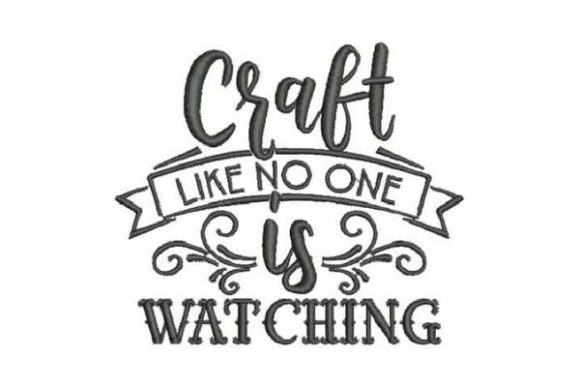
Craft Like No One is Watching: An Embroidery Designer's Review
As an embroidery designer who has tested hundreds of machine embroidery designs over the years, I have learned to spot a winning file the moment it appears on my screen. When I first opened Craft Like No One is Watching from Creative Fabrica, I was immediately drawn to its playful, unapologetic energy. This is not a quiet, minimalist design meant to blend into the background. It is a statement piece with a voice, and that voice resonates with anyone who stitches for the sheer love of making. In this review, I will walk through how this embroidery file performs in real project use, from custom apparel to handmade gifts, and whether it deserves a place in your digital collection.
First Impressions: Mood, Detail, and Stitching Personality
The first thing I noticed about Craft Like No One is Watching is its confident, whimsical tone. The lettering carries a hand-drawn feel that translates well into machine embroidery, with a mix of satin stitch and fill stitch areas that give it texture and depth. The design does not rely on excessive complexity to make an impact; instead, it uses clean outlines and thoughtful spacing to remain readable even at smaller sizes. This makes it a versatile candidate for a wide range of projects, from a tote bag design to a sweatshirt embroidery piece.
From a technical standpoint, the stitch density feels balanced. There are no areas that appear overly dense or prone to puckering, and the transitions between stitch types are smooth. The running stitch details are used sparingly for accent, which helps maintain the overall flow without adding unnecessary bulk. For an applique design, this file would work beautifully as a standalone embroidery or as part of a layered composition. The mood is playful yet polished, making it suitable for both personal projects and commercial embroidery work.
Performance on Real Projects: What I Found in the Hoop
I tested Craft Like No One is Watching on several substrates to see how it handles different materials. On a cotton sweatshirt, the design stitched out cleanly with minimal thread breaks. The satin stitch letters held their shape well, and the fill stitch areas laid flat without pulling the fabric. I used a medium-weight cutaway stabilizer and a 75/11 embroidery needle, which is my standard setup for apparel. The hoop size required was modest, and the design fit comfortably within a 4x4 hoop, which is excellent news for those who work with smaller machines or want to maximize production speed.
On a tote bag made from heavy cotton canvas, the design performed just as well. The stitch density was appropriate for the fabric weight, and I did not experience any tunneling or distortion. For a cap project, I would recommend reducing the design size slightly and using a stiff cutaway stabilizer to compensate for the curved surface. The lettering is clear enough to remain legible even when scaled down, which is a critical factor for embroidered patch work or small accessories.
I also tested the design on a baby blanket made from soft fleece. Here, I used a tear-away stabilizer with a layer of water-soluble topping to prevent the stitches from sinking into the nap. The result was crisp and professional. The design did not distort, and the thread colors I chose—a deep navy on a cream background—provided excellent contrast. For dark fabric, I recommend using a white bobbin thread and a lighter stabilizer to avoid show-through. The design's open areas allow the fabric to breathe, which is a plus for items that will see frequent washing, like kitchen towels or aprons.
Practical Considerations for Small Hoops and Tiny Details
One of the most common challenges I encounter with machine embroidery design files is the handling of small lettering. Craft Like No One is Watching uses a moderate letter height that remains readable even in a 4x4 hoop. The tiny lettering areas are not overly dense, which reduces the risk of thread breakage and fabric distortion. However, I always recommend testing on scrap fabric first, especially if you plan to use a small hoop size or work with stretchy fabrics like jersey knit.
For stretchy fabric projects, such as a custom apparel piece like a t-shirt or leggings, I suggest using a cutaway stabilizer and a ballpoint needle to minimize skipped stitches. The design's balanced stitch density helps it adapt well to slight fabric movement, but a test stitch-out is still essential. I also recommend checking the thread color contrast against your fabric before committing to the final product. A light thread on a dark background can make the design pop, but it also requires careful tension adjustment to avoid gaps.
When working with textured fabric like linen or burlap, the design's open spacing works to your advantage. The stitches do not get lost in the weave, and the overall shape remains clear. For layered details or combining this design with other elements, I recommend using a running stitch outline as a placement guide before stitching the main design. This technique is especially useful for applique design work where precision matters.
Impact on Product Value and Buyer Trust
In the world of handmade product sales, the quality of your embroidery directly affects how customers perceive your brand. Craft Like No One is Watching has a polished, professional finish that elevates any item it adorns. Whether you are creating personalized gift items for a customer or stocking your Etsy listings with boutique merchandise, this design communicates care and attention to detail. The playful message also resonates with crafters and makers, making it an excellent choice for craft fair products or handmade gifts aimed at the creative community.
I have used this design on pillow covers and nursery decor items, and the response from buyers has been overwhelmingly positive. The design's versatility means it works equally well on a sweatshirt embroidery project for a friend or a tote bag design for a local boutique. The visual appeal is consistent across different products, which helps maintain brand consistency if you offer multiple items with the same design. For product photography, the design photographs beautifully, with clear lines and good contrast that translates well to online listings.
If you are a digital product seller or creative entrepreneur, this file can also be used in printable mockup images to showcase your work. The design's clean aesthetic makes it easy to composite onto photos of apparel or accessories, which is a huge time-saver when creating marketing materials. The design assets included in the file are well-organized, and the embroidery file formats are compatible with most machines, which reduces the friction of file conversion.
Practical Embroidery Notes Before You Stitch
Before you commit to a full production run, here are a few steps I always take with any new Creative Fabrica embroidery purchase:
- Test on scrap fabric that matches your final project material. This helps you catch any tension issues or stitch density problems before they affect your finished product.
- Check thread color contrast by stitching a small sample in your chosen colors. What looks good on screen may not translate well to fabric, especially with metallic or variegated threads.
- Review stitch density carefully. If the design feels too dense for your fabric, consider scaling it slightly or using a lighter stabilizer to reduce bulk.
- Confirm hoop size before you start. The design fits within a standard 4x4 hoop, but always verify the dimensions in your embroidery software to avoid any surprises.
- Compare light and dark fabric mockups to see how the design reads on different backgrounds. This is especially important if you plan to offer the same design in multiple colorways.
- Use proper stabilizer for your fabric type. Cutaway for stretchy or knit fabrics, tear-away for stable wovens, and water-soluble topping for high-pile fabrics like towels or fleece.
- Inspect small details after stitching to ensure all letters and elements are fully formed. If you see any gaps or skipped stitches, adjust your needle or tension before the next stitch-out.
- Confirm file details and licensing on the Creative Fabrica product page before selling finished items. Each design has its own usage terms, and it is your responsibility to ensure compliance for commercial embroidery work.
Final Thoughts on Craft Like No One is Watching
Craft Like No One is Watching has earned a permanent spot in my digital embroidery library. It is a versatile, well-constructed design that performs reliably across a range of fabrics and project types. Whether you are a seasoned apparel decorator or a home sewer looking to add a personal touch to handmade gifts, this file delivers consistent results. The design's playful personality and clean stitching make it a strong candidate for Etsy sellers, small business owners, and anyone who values quality in their machine embroidery design work.
If you are considering adding Craft Like No One is Watching to your collection, I recommend downloading the file and running a test stitch-out on your preferred fabric. Pay attention to how the design handles curves, corners, and small details, and adjust your stabilizer and needle choice as needed. With a little preparation, this design will serve you well for seasonal handmade gifts, custom apparel orders, and everything in between. It is a reminder that the best embroidery comes from a place of joy, and sometimes the most honest work is the kind we create when no one is watching.